VPSA oxygen plants
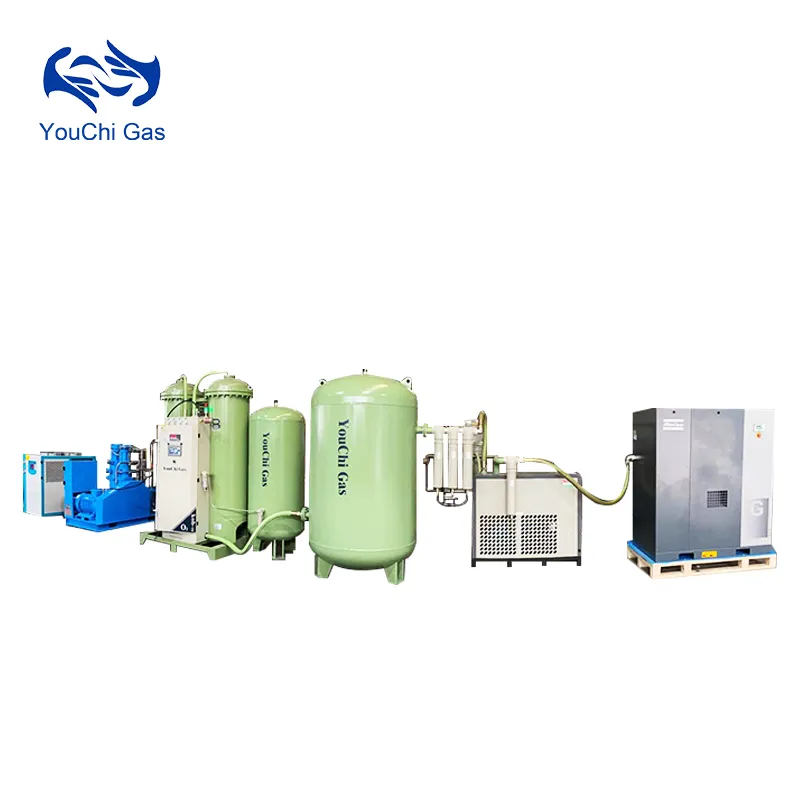
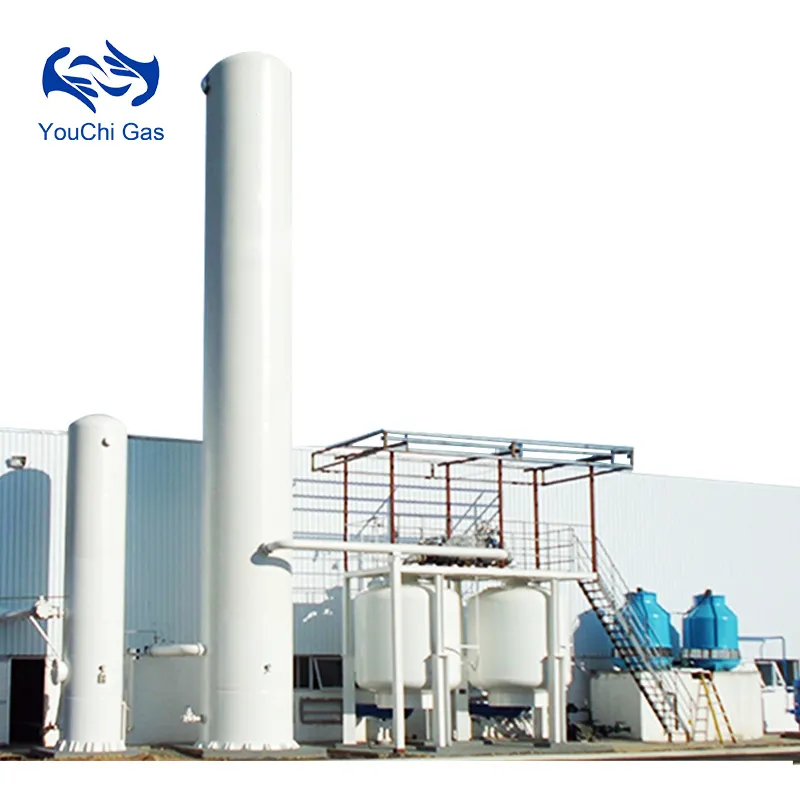
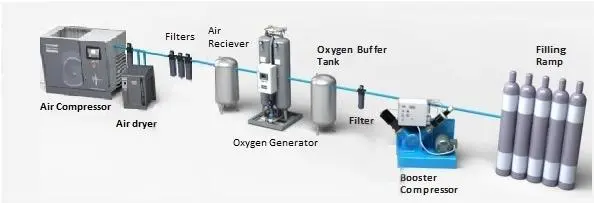
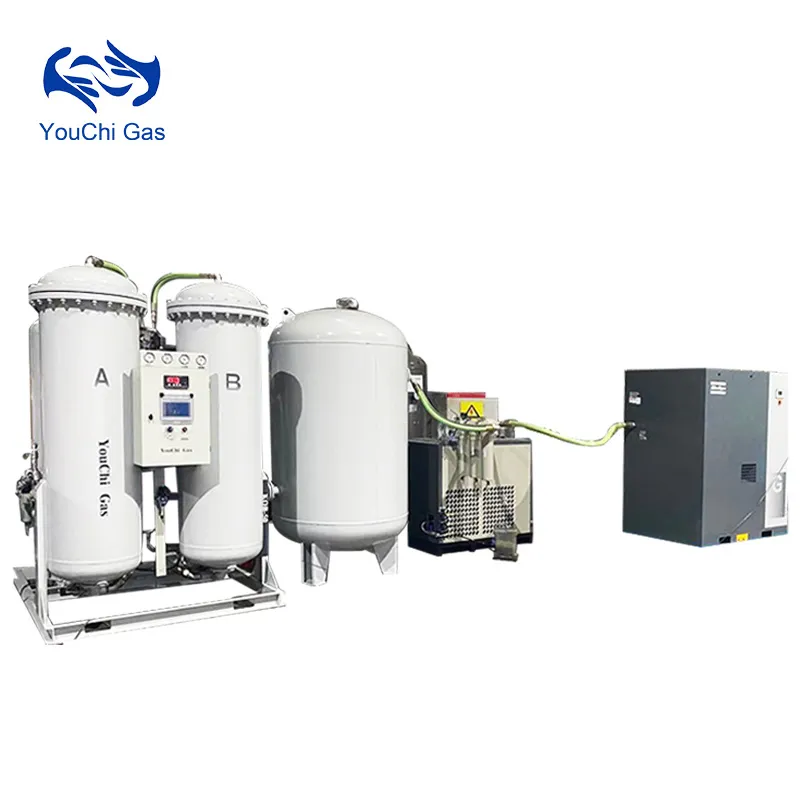
VPSA means Vacuum Pressure Swing Adsorption. Feed air is sucked filters for removal of dust before boosted to 0.3~0.5barg by roots blower. It then goes into an absorber full of absorbent activated aluminum to eliminate water, CO2 and other gases at the bottom, above which N2 absorbed by absorbent zeolite molecular sieve. O2 with argon is output on the top as product gas into oxygen buffer tank and then boosted to higher pressure by oxygen compressor to consumption point.
VPSA means Vacuum Pressure Swing Adsorption. Feed air is sucked filters for removal of dust before boosted to 0.3~0.5barg by roots blower. It then goes into an absorber full of absorbent activated aluminum to eliminate water, CO2 and other gases at the bottom, above which N2 absorbed by absorbent zeolite molecular sieve. O2 with argon is output on the top as product gas into oxygen buffer tank and then boosted to higher pressure by oxygen compressor to consumption point.
Product Details
When the absorbents are at saturation state full of absorbed gases, it is depressurized to negative micro-pressure before vacuumized by vacuum pump to -0.5~-0.8barg. Then the air of the other absorber and some product gas will be let in to push absorbed water, CO2, N2 to atmosphere. The absorbent is regenerated. The other absorber is like this, again and again.
VPSA or VSA oxygen generation plant has similar working principle to PSA method. They both uses the characteristics of adsorbent molecular sieve to separate nitrogen and get oxygen. The difference is PSA has pressurized adsorption (0.2~0.6Mpa), atmospheric desorption. And VPSA has adsorption under atmosphere or slightly above atmospheric pressure (0 ~ 50Kpa), vacuum pump desorption (-50 ~ -80Kpa).
COMMERCIAL APPLICATIONS:
• Glass cutting/processing/blowing
• Iron and steel
• Gold Mining
• Nonferrous metallurgy
• Chemical and petrochemical
• Burning process (glass craft, ampoule making)
• Papermaking
• Waste water treatment
When the absorbents are at saturation state full of absorbed gases, it is depressurized to negative micro-pressure before vacuumized by vacuum pump to -0.5~-0.8barg. Then the air of the other absorber and some product gas will be let in to push absorbed water, CO2, N2 to atmosphere. The absorbent is regenerated. The other absorber is like this, again and again.
VPSA or VSA oxygen generation plant has similar working principle to PSA method. They both uses the characteristics of adsorbent molecular sieve to separate nitrogen and get oxygen. The difference is PSA has pressurized adsorption (0.2~0.6Mpa), atmospheric desorption. And VPSA has adsorption under atmosphere or slightly above atmospheric pressure (0 ~ 50Kpa), vacuum pump desorption (-50 ~ -80Kpa).
COMMERCIAL APPLICATIONS:
• Glass cutting/processing/blowing
• Iron and steel
• Gold Mining
• Nonferrous metallurgy
• Chemical and petrochemical
• Burning process (glass craft, ampoule making)
• Papermaking
• Waste water treatment
MODELS:
|
Model |
Capacity (Nm3/h) |
Oxygen purity |
Delivery pressure |
|
YCOV-50 |
50 |
21%-95% |
≥5bar |
|
YCOV-100 |
100 |
21%-95% |
≥5bar |
|
YCOV-200 |
200 |
21%-95% |
≥5bar |
|
YCOV-300 |
300 |
21%-95% |
≥5bar |
|
YCOV-500 |
500 |
21%-95% |
≥5bar |
|
YCOV-1000 |
1,000 |
21%-95% |
≥5bar |
|
YCOV-2000 |
2,000 |
21%-95% |
≥5bar |
|
YCOV-3000 |
3,000 |
21%-95% |
≥5bar |
|
YCOV-5000 |
5,000 |
21%-95% |
≥5bar |
|
YCOV-10000 |
10,000 |
21%-95% |
≥5bar |
* Oxygen purities are adjustable.
* Delivery pressures are customized to lower or higher pressures by adding boosters.
MODELS:
|
Model |
Capacity (Nm3/h) |
Oxygen purity |
Delivery pressure |
|
YCOV-50 |
50 |
21%-95% |
≥5bar |
|
YCOV-100 |
100 |
21%-95% |
≥5bar |
|
YCOV-200 |
200 |
21%-95% |
≥5bar |
|
YCOV-300 |
300 |
21%-95% |
≥5bar |
|
YCOV-500 |
500 |
21%-95% |
≥5bar |
|
YCOV-1000 |
1,000 |
21%-95% |
≥5bar |
|
YCOV-2000 |
2,000 |
21%-95% |
≥5bar |
|
YCOV-3000 |
3,000 |
21%-95% |
≥5bar |
|
YCOV-5000 |
5,000 |
21%-95% |
≥5bar |
|
YCOV-10000 |
10,000 |
21%-95% |
≥5bar |
* Oxygen purities are adjustable.
* Delivery pressures are customized to lower or higher pressures by adding boosters.
ADVANTAGES:
-Super energy saving. Less average power consumption than other technology. (0.3-0.5kwh/Nm3)
10% less power consumption than general competitors under same conditions.
-Lower maintenance cost, compared to other methods.
-Safe, stable, reliable operation, with proven technology.
-Complete automatic control system. Remote control, unattended. More advanced lOT applications.
-Long lifetime up to 10-15 years.
-Have big capacity range up to 10,000Nm3/h.
-Low noise with less than 80dB(A).
-Many installations in relevant industries and applications.
-Professional services teams at your service.
ADVANTAGES:
-Super energy saving. Less average power consumption than other technology. (0.3-0.5kwh/Nm3)
10% less power consumption than general competitors under same conditions.
-Lower maintenance cost, compared to other methods.
-Safe, stable, reliable operation, with proven technology.
-Complete automatic control system. Remote control, unattended. More advanced lOT applications.
-Long lifetime up to 10-15 years.
-Have big capacity range up to 10,000Nm3/h.
-Low noise with less than 80dB(A).
-Many installations in relevant industries and applications.
-Professional services teams at your service.
Previous: PSA oxygen generators
LEAVE A MESSAGE
If you are interested in our products and want to know more details, please leave a message here, we will reply you as soon as we can.

Quality is the foundation of enterprise survival
Copyright © 2026 Shandong Youchi Gas Import And Export Co., Ltd.